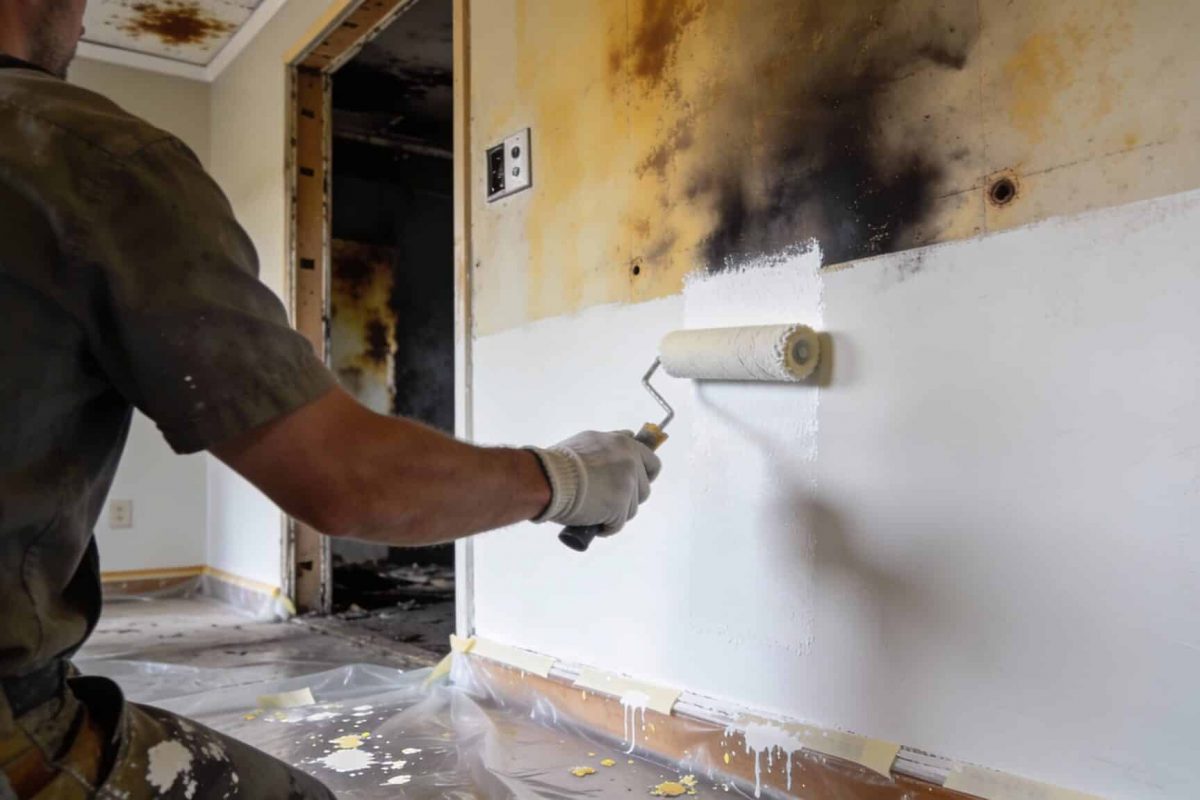
Smoke Odor: Why “Paint and Pray” Is A Dangerous Approach
The char is easy. The smell is where jobs go wrong.
In fire restoration, visual damage is easy to estimate. If the drywall is charred, it gets demolished. If the carpet is melted, it gets replaced. But the invisible damage (the odor) is where contractors often lose money and reputation.
A common mistake in lighter smoke claims (protein fires or puff-backs) is the “Paint and Pray” method: washing the walls and slapping on a coat of sealer. It works for a week. But the moment the first hot day of summer hits, the house smells like a campfire again, and the homeowner is calling you.
The science of pores
When a fire occurs, the heat causes the pores of building materials (wood framing, drywall, finish carpentry) to expand. Smoke and soot particles drive deep into these open pores. As the house cools, those pores close, trapping odor molecules.
If you just seal the surface without neutralizing the odor first, you haven’t fixed the problem. You’ve trapped it. Eventually, thermal expansion will release those molecules right through standard paint.
Corrosion is a ticking clock
Smoke is often acidic. If you don’t wipe down metal fixtures (faucets, doorknobs, appliance finishes) within the first 24 to 48 hours, they will pit and corrode. This justifies emergency cleaning line items on the very first day of the loss, separate from the final structural cleaning.
Document the corrosion risk before you clean. Photograph soot on metal surfaces while it’s still visible. (See: The Golden Rule of Claims)
The two-step fix
To truly remediate smoke odor, you often need a combination of mechanical and chemical approaches before you paint. Your estimate should reflect this complexity.
Step 1: Chemical neutralization Hydroxyl generators or ozone machines chemically break down odor molecules. Thermal fogging is another option that replicates the particle size of the smoke to penetrate the same pores the odor is trapped in.
Step 2: Encapsulation Use a specialized shellac-based or odor-blocking primer, not standard PVA primer. Standard primer is not designed to block odor migration.
If your estimate only shows “clean and paint,” it doesn’t reflect what the job actually requires. (See: Why Your Xactimate Estimate Failed)
The bottom line
Don’t let an adjuster tell you that a simple “clean and paint” is sufficient for significant smoke claims. If you don’t address the trapped odor, you’ll be coming back to redo the job for free.
Paint covers. It doesn’t fix.
The “Year Built” Trap: One Cut Can Cost You Your Business
The “Year Built” Trap: One Cut Can Cause Some Serious Liability During an emergency service call, when water is pouring through a ceiling or a
The Asbestos Pause: Getting Paid for the Process, Not Just the Test
The Asbestos Pause: Getting Paid for the Process, Not Just the Test A positive asbestos test doesn’t just change the scope. It stops the clock.
Biohazard Claims: Balancing Discretion with Documentation
Biohazard Claims: Balancing Discretion with Documentation The photos are hard to take. They’re harder to get paid without. Biohazard losses (sewage backups, trauma scenes, and

Why Bleach Is a Bad Word in Restoration
Why Bleach Is a Bad Word in Restoration When a homeowner asks, “Can’t you just spray some bleach on it?”, you know there is education
The “Grandfather Clause” Myth: Getting Paid for Code Upgrades
The “Grandfather Clause” Myth: Getting Paid for Code Upgrades “That’s grandfathered in. We don’t owe for it.” Every contractor has heard this from an adjuster.
The “Patchwork Quilt” Problem: Fighting for Continuous Flooring
The “Patchwork Quilt” Problem: Fighting for Continuous Flooring The adjuster wants to patch 50 square feet. The homeowner has 800 square feet of continuous flooring