A dry surface doesn’t mean a dry structure.
In water damage restoration, there’s constant pressure to wrap up jobs quickly. Homeowners want their house back. Adjusters question why the equipment is still running. And when the carpet’s no longer squishy, and the drywall doesn’t feel cold, it’s tempting to call it done. But “surface dry” and “structurally dry” are two very different things, and confusing them leads to secondary damage, callbacks, and denied equipment days.
Why Bound Water Takes Longer
Surface water evaporates fast. Bound water, the moisture absorbed into wood studs, sill plates, and subflooring, is stubborn. It requires a vapor pressure difference, via air movement, controlled heat and dehumidification to pull moisture out of the cellular structure of these materials.
If you pull drying equipment while the sill plate is still at 18-20% moisture content, you’re leaving the perfect environment for mold growth behind the baseboards. Two weeks later, when the mold appears, the mitigation company gets blamed. (See: Why Bleach Is a Bad Word in Restoration)
Justifying Your Equipment Usage
This is why consistent moisture mapping and documentation are critical for your bottom line. Insurance carriers constantly push back on equipment rental duration.
Adjuster: “Why did you need fans for 5 days? Usually, 3 days is enough.”
Contractor: “Because on Day 3, the bottom plate was still reading 40% moisture content, well above the dry standard and above the threshold where mold growth becomes a risk.”
Without a daily moisture log and moisture map, ideally with photos of meter readings, you can’t prove the structure was still wet. (See: The Golden Rule of Claims)
Collect good data and let it justify your equipment usage.
Penetrating vs. Non-Penetrating Meters
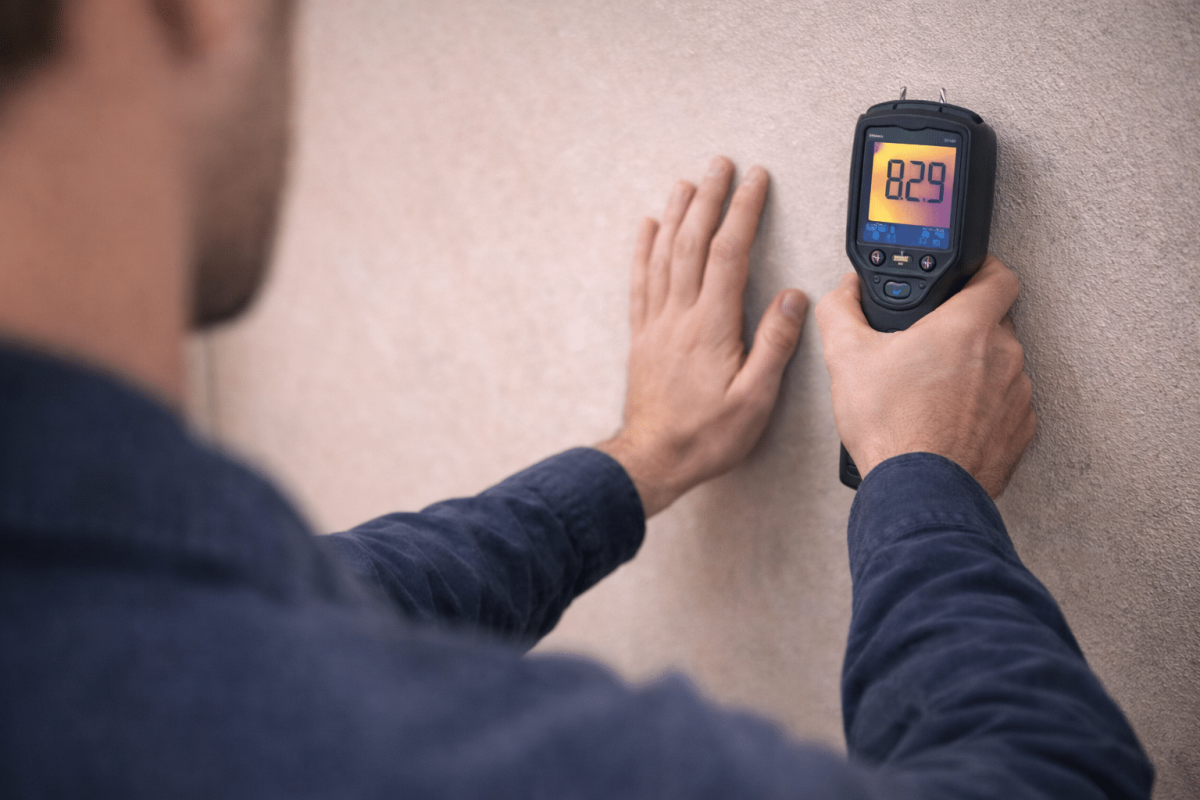
Using the right tools matters for proper structural drying. Non-penetrating meters are great for quickly scanning the perimeter of affected areas without damaging surfaces, but they measure relative moisture levels rather than absolute values. For the core of subflooring or a wood sill plate, you need penetrating meters, preferably with hammer probes. These give you quantitative moisture content readings that hold up to adjuster scrutiny.
Thermal imaging can help you quickly locate areas of concern, but the meter is what verifies the reading. (See: The “Purple Blob” That Sells the Job)
The Bottom Line
Your moisture log is your invoice’s best defense. Document daily, use penetrating meters when appropriate, and don’t pull equipment until your numbers prove it’s dry.
If you can’t show it was wet, you can’t justify drying it.